
PrithviMart • Ayurveda
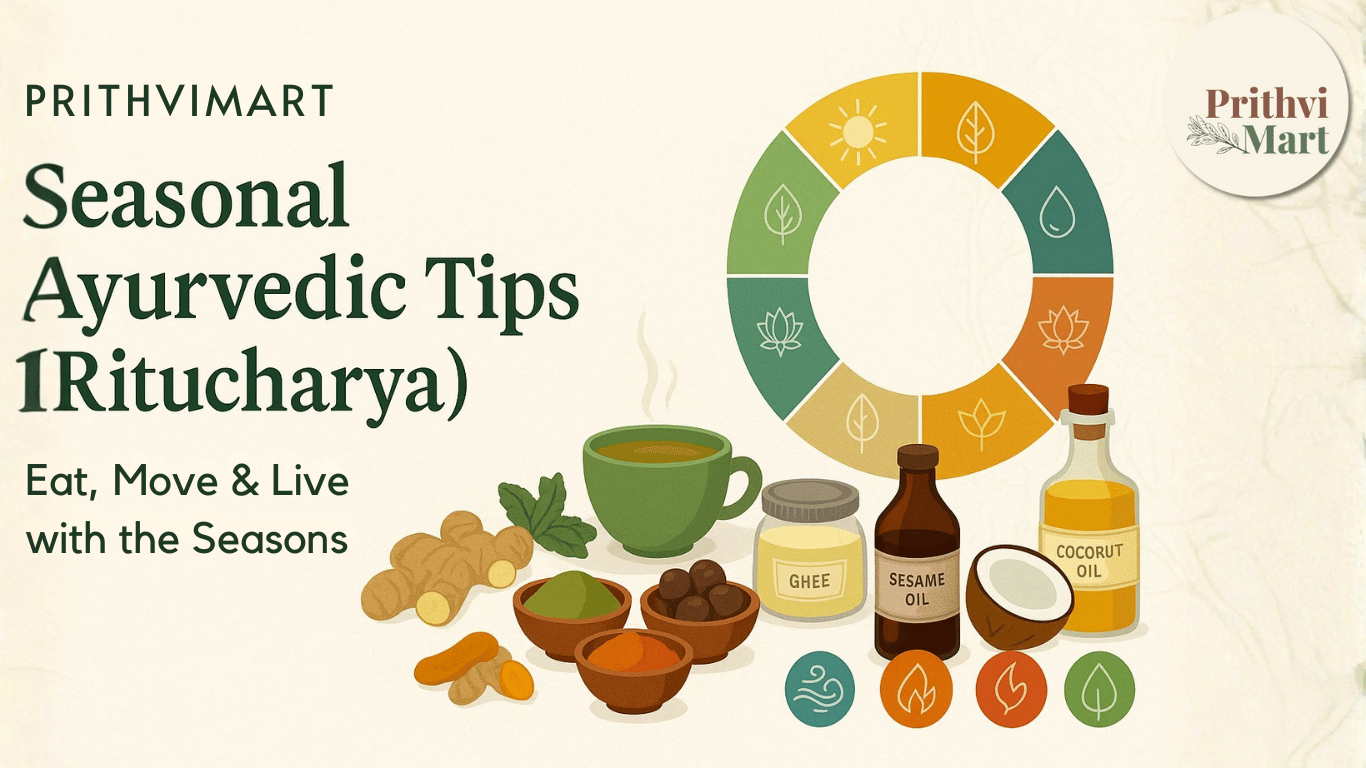
Seasonal Ayurvedic Tips (Ritucharya): Eat, Move & Live with the Seasons
Ayurveda views health as a dynamic balance between your body and the environment. Ritucharya Ayurveda’s seasonal regimen shows how to adjust food, routines, and self-care so you stay resilient year-round.
Why seasons matter (and what happens if we ignore them)
- Biology follows seasonal clocks: daylight, temperature, and humidity shift appetite, sleep, mood, and immunity.
- Ritucharya maintains homeostasis: timely tweaks to food, sleep, activity, and self-care protect digestion (agni) and dosha balance.
- Ignoring seasonal guidance disrupts balance: mismatched habits (e.g., heavy foods in peak heat, daytime naps in damp seasons) stress regulation, and can raise risk for lifestyle disorders such as obesity, diabetes, and hypertension.
Prevention is powerful: small, seasonal adjustments add up to better energy, digestion, and long-term metabolic health.
India’s Six Seasons at a Glance
Shishira
Late winter • Deep cold & dryness • Vata↑, Kapha accumulates
Vasanta
Spring • Kapha melts • Congestion & sluggishness common
Grishma
Summer • Heat & dehydration • Pitta↑; agni may weaken
Varsha
Monsoon • Humidity & pathogens • Agni unstable; Vata aggravates
Sharad
Autumn • Residual heat • Pitta remains prominent
Hemanta
Early winter • Stronger appetite • Cold & dryness persist
Season-by-Season: Practical Tips & Product Picks
Shishira (Late Winter)
Eat & drink: warm, moist meals (khichdi, dals, root veg) with ghee; kindle agni using ginger, cumin, ajwain, black pepper. Sip warming teas (ginger–tulsi).
Lifestyle: Abhyanga with sesame or mahanarayan oil; steady routine; moderate warming exercise.
Ginger/Tulsi Teas • Sesame & Mahanarayan Oils •Digestive Spice Mix
Vasanta (Spring)
Eat & drink: light, dry, gently spiced foods; millets, barley, mung soup. Use trikatu or pepper–dry ginger to cut heaviness; honey-lime warm water (small amounts).
Lifestyle: Invigorate morning cardio, sun exposure, dry brushing; light dinners; avoid day naps.
Grishma (Summer)
Eat & drink: cooling, hydrating foods (cucumber, gourds, leafy salads if tolerated), rice/quinoa; drinks with coriander–fennel–cardamom, rose/hibiscus; coconut water.
Lifestyle: Avoid midday exertion; evening walks; abhyanga with coconut oil; cooling breath (Sheetali).
Varsha (Monsoon)
Eat & drink: warm, light, well-spiced meals; use hing, ajwain, ginger to prevent bloating; prefer boiled/warm water; avoid raw/street foods.
Lifestyle: Keep torso/feet dry; gentle yoga; consider simple nasya oils as advised; avoid daytime sleep.
Sharad (Autumn)
Eat & drink: favor bitter-sweet-astringent gourds, pumpkin, pomegranate, amla; basmati rice. Spices: coriander, fennel, cardamom; go easy on chilies.
Lifestyle: Avoid peak sun; calming yoga/meditation; rose water/sandalwood for skin soothing.
Hemanta (Early Winter)
Eat & drink: nourishing stews, whole grains; sesame/groundnut laddoos in moderation; spices like cinnamon, clove, ginger, black pepper; golden milk at night if suitable.
Lifestyle: Daily abhyanga with sesame oil; strength-building exercise; protect skin & scalp from dryness.
10 All-Season Habits that Keep You Balanced
- Eat with the sun: lunch is the main; dinner is lighter.
- Spice smart: CCF (cumin, coriander, fennel) supports digestion year-round.
- Hydrate by season: warm in cool/damp months; cooling infusions in summer.
- Move daily: morning movement for Kapha; evening calm for Pitta heat.
- Oil wisely: sesame for cold/dry seasons; coconut for summer.
- Guard sleep: consistent timing steadies circadian & seasonal rhythms.
- Watch signals: bloating, sluggishness, irritability, or dryness often reflect seasonal mismatch.
- Adjust portions: appetite tends to rise in cold months, ease in heat.
- Respect weather: avoid overexertion in heat/humidity; skip daytime naps in Kapha-heavy seasons.
- Recheck your state: seasons tilt Vata, Pitta, Kapha; adapt plans as needed.
Curated Seasonal Essentials from PrithviMart
Herbal Teas
Vata-warming (ginger–tulsi), Pitta-cooling (rose–fennel–cardamom), Kapha-lightening (tulsi–pepper).
Spice Staples
CCF blend, trikatu, hing, ajwain, cinnamon, clove, turmeric for season-smart cooking.
Body Oils
Sesame & mahanarayan (cold/dry months), coconut (summer), mustard (Kapha-spring dry rub).
Digestive Supports
Triphala, amla, and ginger blends to keep agni steady through seasonal shifts.
We ship to the USA, Canada, the UK, Europe, the UAE, Singapore, Australia & more.
FAQs
Is Ritucharya just “seasonal eating”?
No, Ritucharya covers food, routine, sleep, exercise, skin/hair care, and mindset aligned to each season.
Do I need big changes every two months?
Not at all. Start with small tweaks, spices, meal timing, oil choice, and workout intensity.
Can Ritucharya help prevent metabolic issues?
Season-aligned habits support digestion, weight, and blood sugar stability. Pair with whole foods and regular activity.
Your Next Steps
- Pick your current season and apply 2 to 3 tips above.
- Stock your pantry & cabinet with season-right teas, spices, and oils: Shop Ayurveda.
- Need personal guidance? Book a consultation or try the Free Dosha Quiz.
Disclaimer: Educational content only. Not a substitute for professional medical advice, diagnosis, or emergency care.